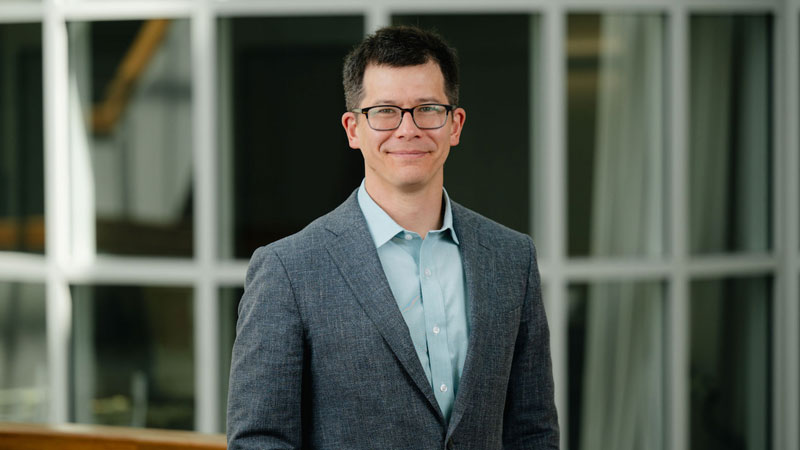
Keary Engle, dean of graduate and postdoctoral studies and chemistry professor at Scripps Research, is the recipient of a 2025 Green Chemistry Challenge Award in recognition of research excellence that exemplifies the principles of green chemistry. The goal of green chemistry is to reduce the environmental impact of research and support energy- and resource-conscious methods of drug development and manufacturing. This award honors Engle’s efforts to support cleaner, more sustainable ways to make medicines and other widely used industrial products.
The American Chemical Society (ACS) and the ACS Green Chemistry Institute annually recognize outstanding contributions in sustainable chemistry to increase implementation of green chemistry technologies. Engle will be presented with the award during the 2025 Green Chemistry Challenge Awards ceremony at the National Academy of Sciences in Washington, D.C., on September 3, 2025.
Engle’s breakthrough centers on a new type of chemical catalyst—a substance that speeds up chemical reactions—made from nickel. Traditional catalysts require expensive materials like palladium and energy-intensive processes to keep them stable during research. Engle’s nickel-based catalysts work in normal air conditions, eliminating the need for specialized equipment and reducing energy consumption. This discovery also provides a more cost-effective alternative to palladium since nickel is more abundant in the Earth’s crust.
By inventing a strategy to stabilize an otherwise reactive form of nickel and harnessing it for catalytic applications, Engle and his lab have opened new possibilities for manufacturing and are enabling streamlined access to a range of functional compounds—from medicine to advanced materials.
“The Green Chemistry Challenge Awards highlight how innovation in chemistry is driving solutions for a healthier, more sustainable world,” says Albert Horvath, ACS chief executive officer. “Congratulations to this year’s winners, whose work reflects the creativity and commitment of both academia and industry. Their achievements show how green chemistry continues to push the boundaries of science while making a lasting impact on society and the environment.”