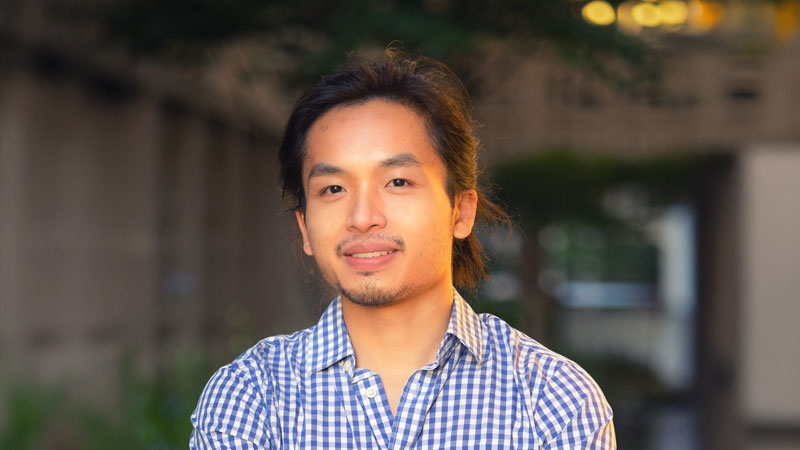
Scripps Research postdoctoral fellow King Hung has been selected as a Damon Runyon Fellow, which recognizes exceptional early-career scientists pursuing cancer causes, mechanisms, therapies and prevention, including molecular approaches to cancer prevention for inherited cancers.
The fellowship supports outstanding postdoctoral researchers conducting basic and translational cancer research in the laboratories of leading senior investigators. Each fellow will receive $300,000 over four years.
Hung’s research investigates how cells within tissues communicate and respond to their environment to coordinate collective behavior. This cellular communication is disrupted in cancer, leading to uncontrolled tumor growth. Using flatworms (animals that can regenerate missing tissues after injury), Hung is investigating how physical forces and biochemical signals work together to coordinate tissue growth.
Applying live-cell tracking during flatworm regeneration, he will simultaneously record tissue-scale mechanical and biochemical signaling activities to understand how tissue mechanics inform regeneration signals. This work addresses a critical gap in regeneration biology: While classical studies have focused on biochemical signals and genetics, the role of mechanical forces in orchestrating tissue regeneration across species remains poorly understood.
Hung has previously been recognized with several prestigious honors, including the Harold M. Weintraub Graduate Student Award (2023), which recognizes outstanding achievement in biological sciences, as well as being named to Forbes’ “30 Under 30 in Science” (2023). He completed his PhD at Stanford University, where he received the Denise A. Chan Best Thesis Award in Cancer Biology.