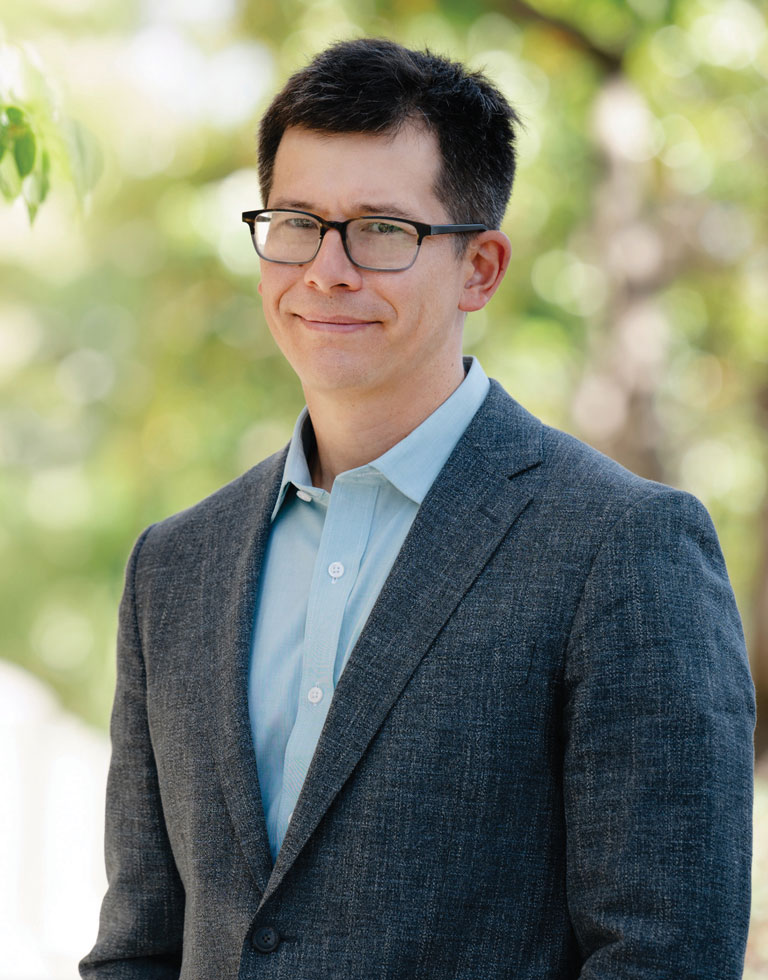
Dean of Graduate & Postdoctoral Studies
As dean of Scripps Research’s graduate program, one of the questions I often hear when traveling to conferences or speaking with prospective students is, “How is the PhD program at Scripps Research different from those of other universities?” I usually explain the obvious differences, such as a more intense focus on research, or the blurring of lines between research areas or even our lack of an undergraduate program, which eliminates the need for grad students to serve as teaching assistants. While these structural distinctions matter, they’re not the reason why education programs here truly stand out.
At Scripps Research, what makes our graduate program special is that we’re not beholden to tradition. We’re creating tradition. We’re a young graduate program, and that means we’re nimble, we’re growing, we’re improving and we’re asking every day how we can best train the next generation of biomedical scientists in innovative ways that rise to the standards of today and the challenges of tomorrow.
Earlier this year, we held our 33rd commencement, where we honored the achievements of our latest class of graduate students earning doctoral degrees. Even though they’re graduating into a unique and uncertain ecosystem, the good news is that they already know how to navigate a rapidly changing landscape. The Skaggs Graduate School of Chemical and Biological Sciences focuses on empowering students with the tools for managing uncertainty, asking provocative questions, looking at the way things are (existing dogma), and pushing back on ideas, structures or decision-making processes when they don’t make sense or are not grounded in reality. We train our students to be truth seekers and equip them with the ability to systematically chip away at important problems, build teams and solve the most pressing challenges facing society today.
As this next class goes out into the world, I encourage them to lean on the network they’ve built during their studies. Even though it’s a time of tremendous change, this is what they’ve trained for during their time at Scripps Research: how to persevere, how to overcome obstacles, how to build and nurture community in times of uncertainty. These life skills are more important now than ever—for all of us.
In this issue of Scripps Research Magazine, I’m excited to share with you a few stories about these extraordinary scientists, as well as our other alumni. You’ll also learn about our outreach programs, including summer internships for college undergrads and high school students, K-12 classroom visits and more. We’re also working to engage members of our community and share with them the vital research being done by our scientists. At Scripps Research, we hope that through our coursework and curriculum, and through frequent opportunities to engage with various audiences, we’re developing this next generation of scientific leaders to take as much pride in their communication as they do in their laboratory skills.
With increased uncertainty about federal funding, the importance of philanthropic support cannot be overstated. We have been incredibly fortunate to benefit from the generosity of many individuals and foundations who share our passion for robust scientific education. From endowing fellowships for graduate students to enabling internships for younger scientists, supporting research and education in the biomedical sciences is equivalent to planting seeds for future generations to reap the rewards. Indeed, there’s clear and unambiguous data that every dollar invested in biomedical sciences pays for itself two or three—or by some estimates five—times over.
We’re unequivocally committed to staying at the leading edge of scientific education, training future generations of researchers and inspiring curious minds of all ages with the hope and promise that robust scientific inquiry can bring to the world. We’re grateful to have you along for the journey.

Keary M. Engle, PhD
Dean of Graduate & Postdoctoral Studies