From campus to catalyst—alumni shaping a better world
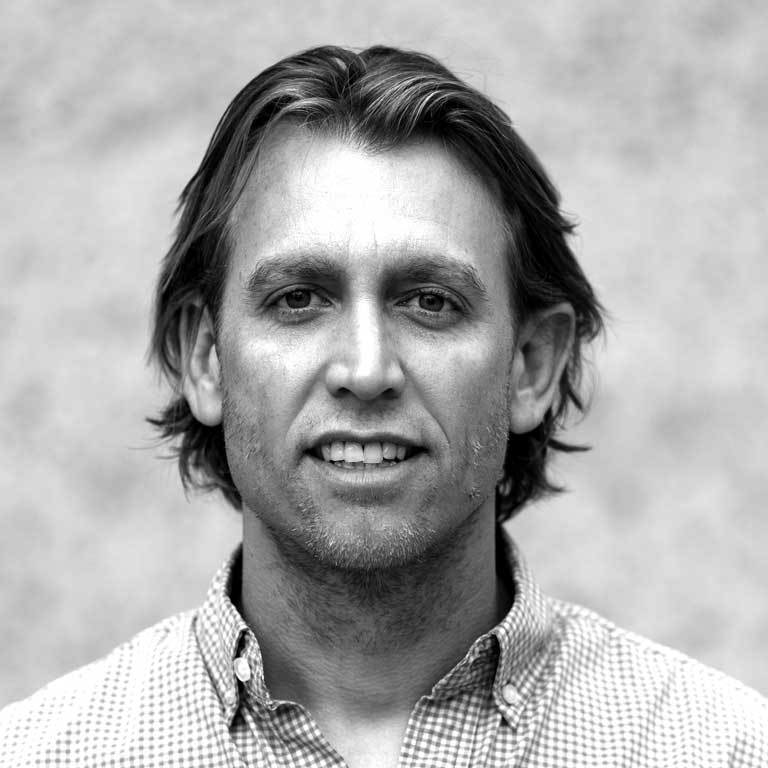
Andrew Ward
CLASS OF 2008
Andrew Ward leads a “resolution revolution,” wielding a powerful cryo-electron microscope to peer so deeply inside proteins and viruses that he can pinpoint structural vulnerabilities—information prized by drugmakers. Invited to join the Scripps Research faculty soon after graduation, he is now a professor in the Department of Integrative Structural and Computational Biology. Ward made critical contributions in the race to create the first COVID-19 vaccines and is now helping reveal the roots of complex diseases that include cancer and Alzheimer’s.
What do you enjoy most about your work?
Problem solving from the mundane to the complex.
How did the graduate school provide the skills necessary for your current work?
Being exposed to such an accomplished and driven faculty inspired me to be bold, take on seemingly impossible challenges and constantly innovate.
You have experienced great success in your career to date. What are some of the highlights?
Solving the structure of the seasonal coronavirus spike from HKU1 was the springboard for solving SARS, MERS and eventually SARS-CoV-2—all satisfying accomplishments. On a daily basis, developing new enabling technologies for vaccine design, contributing from bench to bedside for several vaccines, and interacting with amazing mentors as well as brilliant students, postdocs and professional scientists keep the highlight reel going.
What advice would you give to others considering a career in structural and computational biology?
Embrace all of the new tools and technologies as they become available, be multidisciplinary, and apply structural and computational biology to real-world biomedicine.
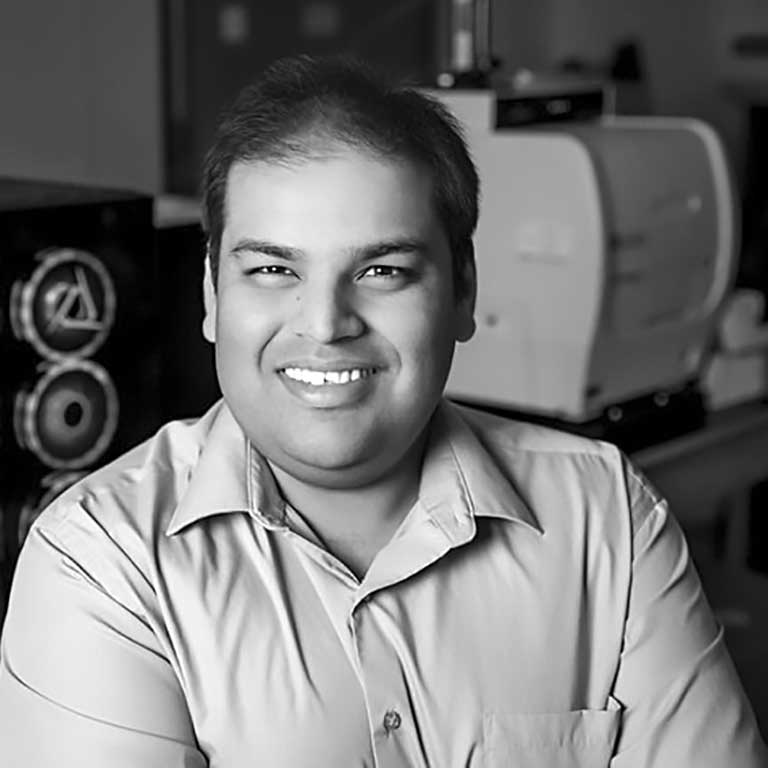
Angad Mehta
RESEARCH ASSOCIATE 2015-2019
When graduate student Angad Mehta hosted Pete Schultz, President and CEO of Scripps Research, as a speaker at Texas A&M University, he had little idea he would be invited to complete his postdoctoral training in the lab of the world-renowned chemist. But the day after Mehta delivered his own presentation, Schultz sent him an offer letter. Today, Mehta is the T.M. Balthazor Faculty Scholar and Assistant Professor of Chemistry at the University of Illinois, and happily embodying a Don Quixotesque “spirit of adventure” that he learned at Scripps Research.
Did you always plan to enter academia?
While that was my plan A, I knew that these are highly competitive positions. Also, given the scientific questions I wanted to address in my lab, I knew that I would have to find a position in a top graduate program so that I would have access to talented students and state-of-the-art infrastructure. I am thrilled to be at the University of Illinois.
What skills did you learn in the Schultz lab that continue to impact your current research?
To be fearless in choosing interesting scientific problems to tackle, then trying to find creative and elegant ways to address them. Additionally, I learned the spirit of adventure while doing some really cool and challenging science. During our lab meetings, I used to sit across from a black-and-white print of Picasso’s “Don Quixote” and, for me, that sketch symbolized the spirit we shared.
What advice would you give to others considering a career in academia?
Just focus on doing the best possible science. Trust that all the training you have gone through is going to make it possible for you to tackle those challenging scientific questions. I very much value the academic freedom, scientific risk-taking, and opportunity to build a research program and lab that I could only dream of as a graduate student or postdoc.
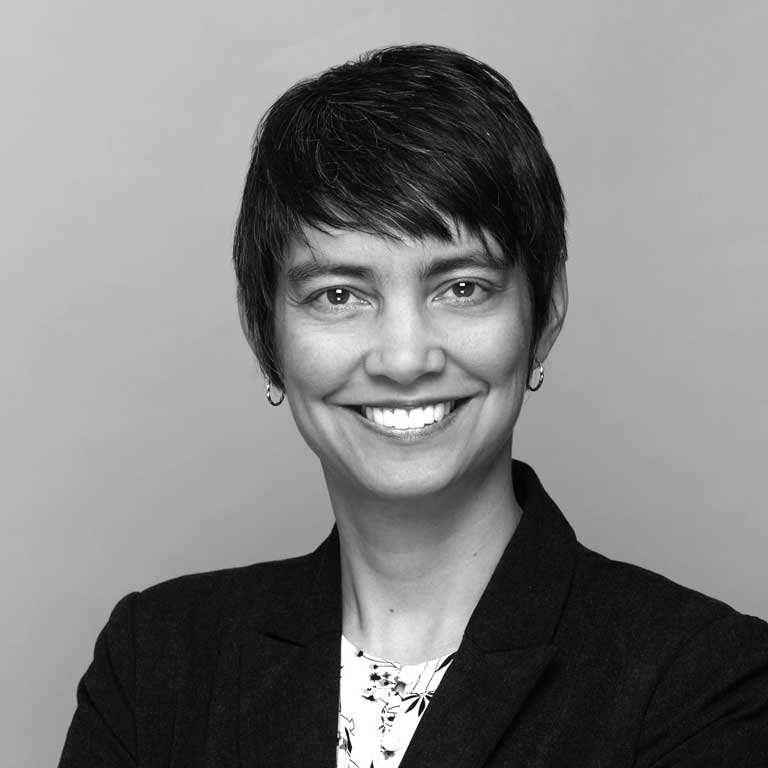
Desiree Thayer
CLASS OF 2006
As an alliance management professional at SandboxAQ, Desiree Thayer uses her education to orchestrate ambitious science across multiple partners. She is also active in politics and currently serves as a councilmember for the City of Burlingame, California. Recently, she combined both interests in a presentation to the Rotary Club about AI and quantum technologies and how they speed the drug discovery process with better predictions for outcomes.
After earning your PhD, you led drug discovery programs at several top biotechs. What prompted the switch to alliance management?
I wanted to help bring new technologies and innovation to drug discovery. Strategic alliances create programs that can do more than what the partners could do independently.
How did your education and training prepare you for this role?
At Scripps Research, I learned how to work with cross-functional teams, which helps in my current role. Here, I need to understand the data generated by diverse scientific disciplines: medicinal chemists, structural biologists, machine learning engineers and many others. I also have to help guide this newly formed team toward fulfilling the obligations of the alliance contract.
That sounds challenging.
Yes, every company has its own culture and way of working, but in order for an alliance to work effectively and efficiently, we have to think of our joint team as a new entity with its own ways to communicate and collaborate. I help create that.
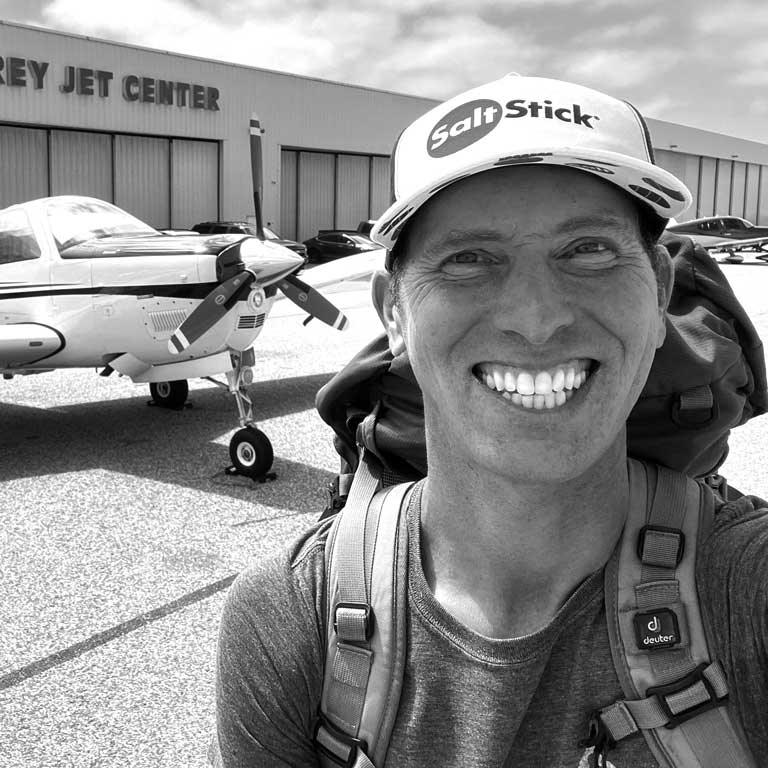
Jonathan Toker
CLASS OF 2001
Jonathan Toker is a chemist and elite athlete who invented the SaltStick brand “out of a personal need for better electrolyte intake during long-distance triathlon training and events.” When SaltStick was acquired by Alete in 2020, Toker made his exit. He competes in races worldwide, won the 2024 Catalina Island Half-Marathon at the age of 49 (besting 600 participants) and has added a commercial pilot license to his many achievements. He continues to consult within the industry.
You grew up in Montreal. How did you find your way to Scripps Research?
Even in 1995 (when I applied) the graduate school was world-famous, and after staying at home for college, I felt that a big move to sunny San Diego was the smart thing to do at that time in my life—and I was right!
When you decided to pursue your PhD in chemistry, with Kim Janda as your advisor, did you know it was going to influence your athletic career?
I had no idea whatsoever! Since childhood, I’ve been an avid scientist and I developed a love of chemistry very early on. When I was able to merge the two loves—chemistry and athletics—I found my niche. I invented the SaltStick brand in 2005 and left my first job as a research scientist two years later for the unknown of entrepreneurship. I’ve never looked back.
Which scientific accomplishments are you most proud of?
I am most proud of my contribution to and legacy within the nutraceutical arena. FastChews was the first-ever chewable electrolyte tablet on the sports nutrition market and Vitassium is a medical food specifically addressing patients with certain types of dysautonomia, a nervous system disorder.
What skills developed at Scripps Research helped you succeed with SaltStick?
Tenacity and analytical thinking, attention to detail, communication, and the ability to manage a big-picture project and its minute components. I’m still grateful to all the staff and researchers at Scripps who assisted on my journey—albeit an unusual one.
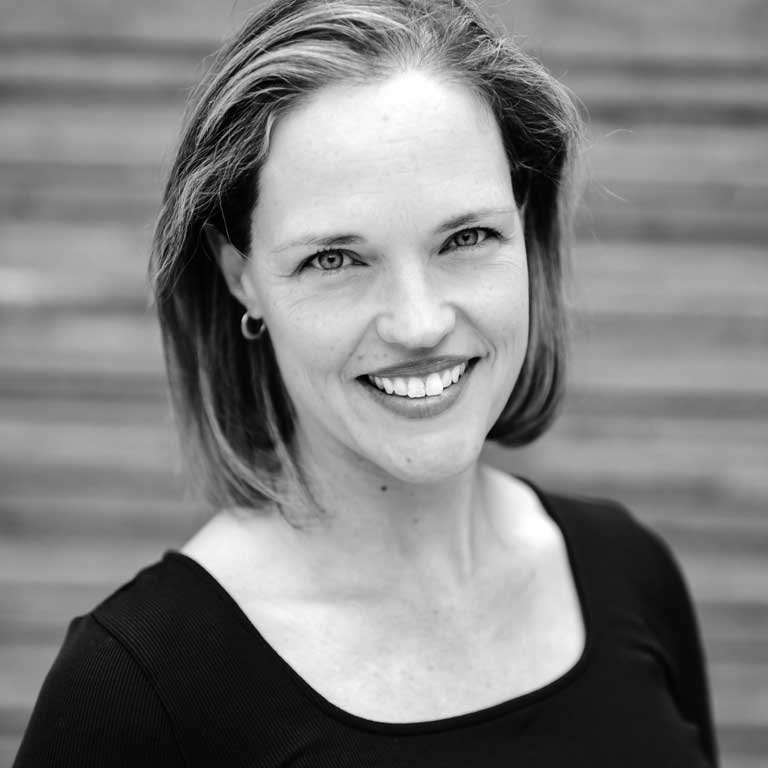
Kathryn Applegate
CLASS OF 2010
At BioLogos, founded by former NIH director Francis Collins, Kathryn Applegate melded her love of science and the liberal arts with her Christian faith. She served as a program director there for 12 years before transitioning to contract work so she could spend more time, along with her husband, parenting their two middle school-aged children. A dedicated advocate for science, Applegate remains professionally active and is currently vice chair of The American Scientific Affiliation board of directors.
How did you come to choose the graduate school at Scripps Research for your PhD?
I was a biophysics and math major who loved the liberal arts, and I was torn about which way to go. In the end I chose Scripps Research because of its world-class scientists and state-of-the-art facilities. I wanted to learn from the best. (The breathtaking ocean views from Torrey Pines sealed the deal.)
After earning your degree in biology, you joined BioLogos as a program director. What did that work entail?
In the early years, most of the focus was on helping Christians understand the evidence for evolution. Later we began to explore bioethical questions, climate change and what it means to be human. Now, BioLogos is responding to the gutting of scientific research through an initiative called “Science is Good.” This message is needed now, when mistrust of science and scientists is at an all-time high.
What advice would you give to others who want to become public advocates for science?
Be curious. Try to understand what your audience cares about, and help them see how science supports or connects to those values. Most people aren’t persuaded by scientific evidence, as frustrating as that is. They are persuaded by stories and personal experience, and ultimately, by love. Help them see how science protects what they love.

Zachary Demko
CLASS OF 2002
Zachary Demko earned his PhD in chemistry with advisor K. Barry Sharpless, who had just been awarded the 2001 Nobel Prize in Chemistry for his work on chirally catalysed oxidation reactions. (Sharpless would win a second Nobel in 2022 for the development of click chemistry.) “Being in the Sharpless lab was definitely a pinnacle of my career,” says Demko. Today, Demko is senior director of Scientific Communications and Clinical Research at Natera, a global leader in DNA diagnostics—but still nurturing hopes of returning to chemistry.
What do you enjoy most about your work at Natera?
The science here is really cutting-edge and the people are smart, dedicated and hard-working. It’s awesome to be part of a team that produces such high-quality deliverables and is changing the way medicine is practiced.
How did working with K. Barry Sharpless inform your career?
I have always appreciated how much he truly loves science—he has the excitement of a little kid when it comes to exploring new chemical reactivity. He taught me the importance of keeping in touch with my love of science.
Any plans to return to chemistry?
It would be really hard to walk away from the successful team at Natera. With that said, I’ve been doing some studying on the side on grid-scale battery storage technology. That’s my current fascination!