Aging and disease wear down our organs, tissues and cells. At Scripps Research and Calibr-Skaggs, scientists are finding ways to repair and renew the body from within.
Most medicines that exist today are designed to slow disease or keep symptoms at bay. Some can even prevent a condition from getting worse. Regenerative medicine, however, asks a bigger question: What if we could reverse disease entirely and rebuild the body back to health?
At Scripps Research and its drug discovery arm, the Calibr-Skaggs Institute for Innovative Medicines, scientists are leveraging a deep understanding of regenerative biology to develop medicines that boost the body’s ability to repair damage caused by aging and disease. They are developing regenerative therapies for the heart, lungs, digestive tract, eyes and other organs that activate natural repair mechanisms to heal tissues that otherwise wouldn’t be able to heal themselves.
“In the next two to three years, there’s potential for us to clinically show we can reverse heart, lung and gastrointestinal damage,” says Pete Schultz, President and CEO of Scripps Research and Calibr-Skaggs, as well as holder of the L.S. “Sam” Skaggs Presidential Chair. “If we can reverse the damage that accrues from age or disease, it will have a huge impact not only on the quality of life, but also on the economic cost of healthcare. And if we show that we can reverse damage in a disease setting, then can we go the next step and make aged organs younger?”
Schultz notes that effective regenerative medicines are urgently needed, as humanity faces a looming aging crisis. These advances in regenerative science are arriving at a moment when the global population is aging rapidly, and age-related disease is becoming one of the most pressing challenges in medicine. Against that backdrop, these therapies point to a new way forward: one that seeks not just to manage decline, but to also restore function and extend healthier years of life.
MAPPING THE BODY’S REGENERATIVE PATHWAYS
At some point in the aging process, the body loses its ability to regenerate cells, organs and tissues. Schultz and Associate Professor Michael Bollong want to understand when exactly that is.
Bollong, who is also the Early Career Endowed Roon Chair for Cardiovascular Research, first dove into the body’s regenerative pathways—the inherent mechanisms that dictate tissue growth and organ repair—during his PhD work in the Schultz lab. Today, they work closely with the Calibr-Skaggs team to identify medicines that can precisely target these pathways. Much of this research builds on Schultz’s pioneering work in the field, which was originally based on the hypothesis that small molecules could control cell fate throughout the body.
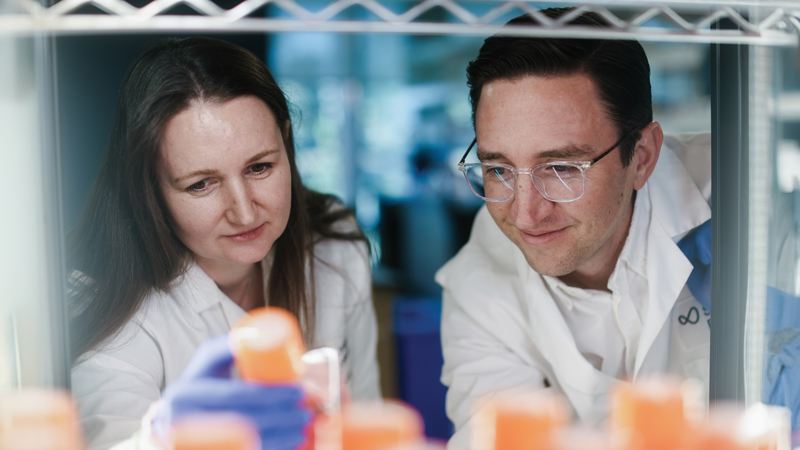
“We want to know if we can identify small molecule drugs that would endow humans with the regeneration capacities observed in other species, like salamanders.”
Michael Bollong
“We want to know if we can identify small molecule drugs that would endow humans with the regeneration capacities observed in other species, like salamanders,” Bollong says.
In this context, “regeneration” is the process of making new functional cells to replace those lost or damaged during aging or disease. To do this, scientists must instruct existing precursor cells to divide and mature into the more specialized subtype. These precursors could be endogenous stem cells or parenchymal (functional) cells, depending on the organ in question.
While the basic concept of regenerating cells may sound straightforward, in practice it is complicated by organ-specific biology, distinct cellular pathways and the challenge of designing drugs that can safely target them. Different organs might not harness the same pathway for regeneration; for example, the liver’s precursor cells are not necessarily the same as those found in the kidney. It then becomes a matter of identifying if those pathways can be targeted with a drug, the chemical structure of said drug, and finally, if that drug will be both selective and safe.
It is also important that these drugs are small molecules: simple oral medicines that are easier to scale and deliver across a variety of underserved communities around the world. Small molecules offer a novel approach compared to others in the industry, which leverage larger (and more complicated and costly) modalities like proteins and cells.
This is why combining Scripps Research’s scientific expertise in molecular pathways with the drug discovery and development capabilities of Calibr-Skaggs is essential for progress. The Calibr-Skaggs team collaborates with scientists like Bollong to screen and uncover potential small molecule medicines, carefully tune their chemical properties for specific diseases, extensively evaluate them in advanced preclinical models, and if all goes according to plan, launch them into the clinic and reach patients.
“All of our regenerative therapies start with an exciting basic science discovery, but that is usually only the very beginning,” says Kristen Johnson, senior director of discovery biology at Calibr-Skaggs, who leads much of the screening work. “Next comes systematically validating those targets, optimizing drug properties for efficacy and safety, and in some cases repurposing existing molecules. All these pieces (and more) are necessary to eventually deliver medicines into the hands of patients.”
Travis Young, Calibr-Skaggs’ executive vice president, echoes Johnson’s sentiments, as well as what makes work at the institute so differentiated.
“Calibr-Skaggs is uniquely positioned in two ways: the first is in our ability to translate ideas from an initial back-of-a-napkin idea to first-in-human clinical trials, and the second is in our many disciplines and technologies housed under one roof,” he says. “It’s unique, especially in the academic setting, to have so many areas of expertise working within close proximity together.”
MENDING A BROKEN HEART
 The leading cause of death worldwide is cardiovascular disease. The World Health Organization estimates that these conditions, which include heart attacks and strokes, claim 17.9 million lives every year.
This is in large part due to the heart’s muscle cells, called cardiomyocytes. These cells are terminally differentiated, meaning they stop dividing shortly after birth. Cardiovascular diseases are so deadly because they leave cardiomyocytes wounded, weakened and largely unable to repair themselves.
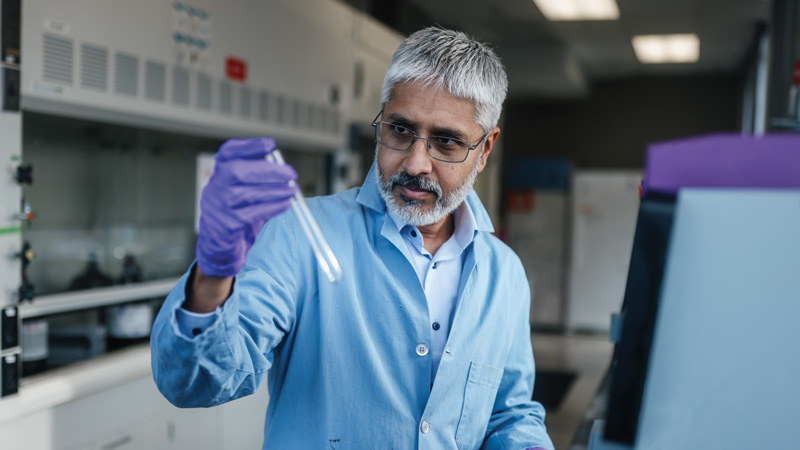
“Our idea is to design a drug with the right properties in a simple formulation to specifically activate YAP in the heart, triggering cardiomyocyte revision and repair, and then safely clearing it from the body.”
Arnab Chatterjee
“The cardiomyocytes you have when you’re a teenager are essentially the same ones you have when you’re 75 years old,” Bollong explains.
To address this need, Scripps Research and Calibr-Skaggs scientists are developing a series of drugs that activate a protein called YAP (Yes-associated protein 1). YAP is part of the highly conserved hippo-YAP pathway, which controls organ growth and cell division. Research has shown that certain organs naturally turn the hippo-YAP pathway on and off to replenish their tissues—yet not the heart.
“Our idea is to design a drug with the right properties in a simple formulation to specifically activate YAP in the heart, triggering cardiomyocyte regeneration and repair, and then safely clearing it from the body,” says Arnab Chatterjee, vice president of medicinal chemistry at Calibr-Skaggs.
The researchers are developing a YAP activator that can be locally delivered as a hydrogel to the sac that surrounds the heart, called the intrapericardial space. Ultimately, they envision an interventional cardiologist would administer the drug under conscious sedation. The drug would then slowly bathe the injury over the course of the following week, repairing the damage—no surgery required.
Today, the YAP activators are in preclinical testing, with encouraging results thus far: in certain models after a heart attack, cardiac function has been completely restored post- treatment. FDA Investigational New Drug (IND)-enabling studies, the final step before a medicine enters human testing, are expected to kick off later this year.
“Ideally, this would be a one-time therapy that would hopefully save someone from progressive decline in heart failure, including the millions of heart failure patients in the U.S. and beyond.” adds Young. “There’s also the potential to explore our YAP activator to repair damage from burns, wounds and more.”
A SECOND WIND
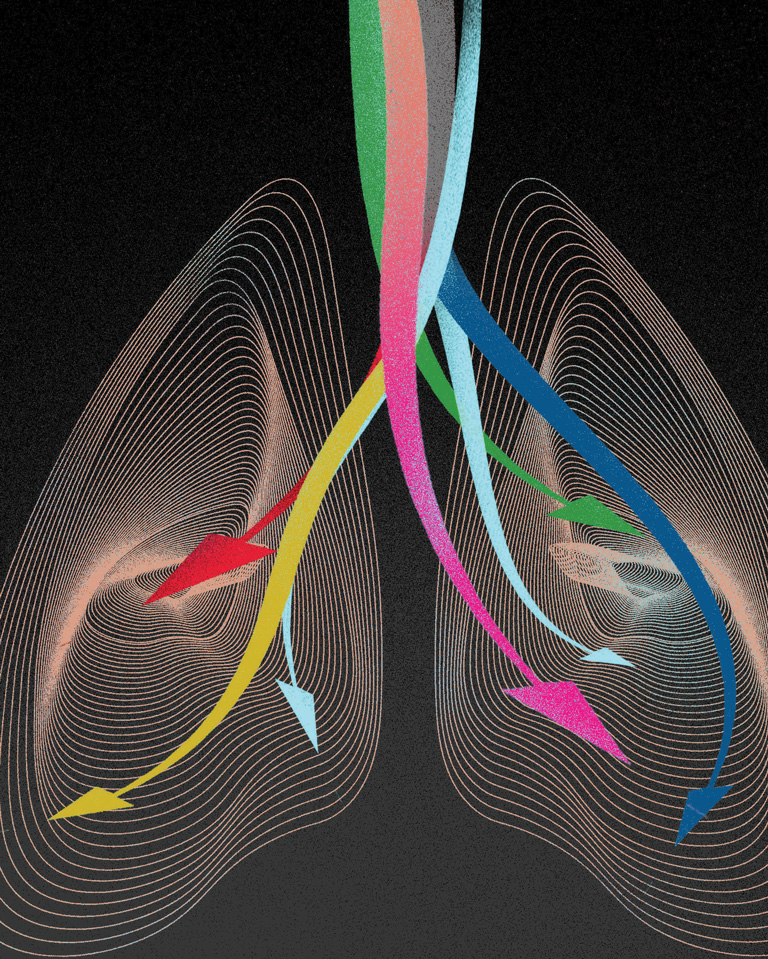 Unlike cardiomyocytes, lung cells do hold the capacity to regenerate themselves. But the lungs’ ability to heal declines significantly over time, due to stressors like age, scarring, infectious diseases and pollution.
Today, severe respiratory conditions are the third leading cause of death around the globe, ranging from the hundreds of millions of people impacted by widespread diseases like chronic obstructive pulmonary disease (COPD) to rarer but equally deadly illnesses such as idiopathic pulmonary fibrosis (IPF). Their available treatment options primarily manage symptoms and modestly slow disease progression. None are able to halt or reverse the underlying lung damage.
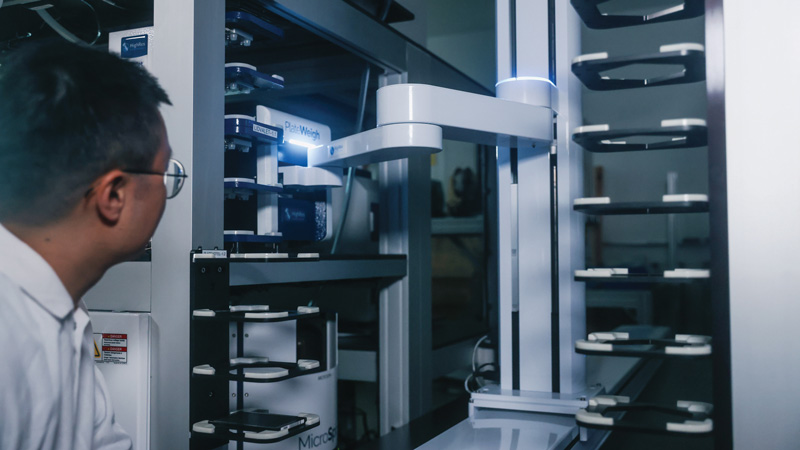
“Lung cells must turn over pretty quickly relative to other organs, meaning your stem cells need to be incredibly healthy.”
Michael Bollong
This is why the Scripps Research and Calibr-Skaggs teams are developing CMR316: an inhaled, lung-targeted drug designed to stimulate stem cells in the lungs’ lower airways, known as type 2 alveolar epithelial cells (AEC2s). CMR316 works by expanding the number of AEC2s, which then mature into AEC1s—the cells responsible for gas exchange and maintaining lung function. The team published a study in PNAS in April 2024 validating this mechanism and providing pharmacological proof of concept for the approach.
“Lung cells must turn over pretty quickly relative to other organs, meaning your stem cells need to be incredibly healthy,” Bollong explains. “That’s essentially what CMR316 does: it endows the older, damaged cells with the capacities of younger ones.”
Researchers first uncovered CMR316 using ReFRAME, a drug repurposing library built by Calibr-Skaggs. ReFRAME maintains more than 13,000 FDA-approved or extensively studied molecules that researchers rapidly sort through to determine if they could treat any other major diseases.
“The CMR316 drug development program started with our team asking the question: Can we directly screen for molecules that expand human lung stem cells?” says Chatterjee. “One collection we screened was ReFRAME, which revealed a molecule we could repurpose—one that repairs lung damage in a myriad of ways.”
Once Chatterjee’s team optimized the CMR316 molecule from a medicinal chemistry perspective, extensive preclinical safety and efficacy studies were performed to ready the regenerative medicine for the clinic.
CMR316 is currently being investigated in a phase 1 clinical trial both in healthy volunteers and IPF patients, with data expected later this year. A phase 2 study is targeted for 2027. The team is hopeful the regenerative medicine also can be used to treat other chronic pulmonary conditions, including COPD and emphysema.
REVERSING A GUT REACTION
 As a colorectal surgeon, Amy Lightner has seen the devastation that inflammatory bowel disease (IBD) wreaks on a person’s quality of life, especially for younger generations. IBD cases have increased by nearly 50% around the world over the last two decades, with most diagnoses occurring between ages 15 and 35.
Lightner, who is also the chief medical officer at Calibr-Skaggs and a professor of molecular and cellular biology at Scripps Research, describes today’s IBD therapies as merely managing the inflammation, rather than actually repairing the digestive tract itself.
“We still don’t know the underlying cause of the IBD, which includes Crohn’s disease and ulcerative colitis,” Lightner says. “We do recognize the abundance of inflammation, so most approved medicines focus on blocking that. But none have focused on repairing the injured intestinal lining.”
Calibr-Skaggs scientists designed the drug CLF065 to regenerate that intestinal epithelium: the protective barrier that regulates what passes from the gut into the body. CLF065 is an engineered glucagon-like peptide-2 (GLP-2), designed to increase its potency and lifetime in the body as a long-acting, once-weekly injectable. It also could be administered as a combination therapy.
“CLF065 holds the potential to work synergistically with the already approved anti-inflammatory drugs, meaning you can address the inflammation while repairing the epithelial barrier to its normal state—both critical aspects in treating IBD,” Lightner adds.
CLF065 is currently being investigated in a phase 2 clinical trial in patients with chronic pouchitis, a common morbidity following reconstructive pouch surgery that significantly diminishes quality of life. Because pouchitis shares disease pathology with other IBD-related phenotypes, the phase 2 study is the first step toward a larger, more expansive trial in Crohn’s disease.
VISIONARY SCIENCE
 As we age and experience oxidative stress, we gradually lose retinal pigment epithelial (RPE) cells. These cells support and renew the tissue at the back of the eye, providing crucial help to photoreceptors—the specialized cells that detect and transmit light. When RPEs decline and photoreceptors die, it can lead to age-related macular degeneration (AMD), the most common cause of vision loss in older adults. Similarly, retinitis pigmentosa is a genetic disorder caused by mutations in photoreceptors, which then leads to dysfunctional RPEs and eventually progressive vision loss as well.
The current standard of care for dry AMD are medications delivered by intravitreal injection, which treat symptoms but do not restore RPE cells. Gene therapies are in development that aim to stimulate these cells, but they have limited effectiveness and are expected to carry a hefty price tag.
“If we can slow—or even better, reverse—the loss of photoreceptor cells, using a one-time injection similar to what we’re developing for the heart, that would be tremendous.”
Michael Bollong
Scripps Research and Calibr-Skaggs scientists have identified several small molecule drugs to target dry AMD at its source and regenerate RPEs. These early drugs are currently being investigated in preclinical trials, ideally entering human studies in 2027.
“If we can slow—or even better, reverse—the loss of photoreceptor cells, using a one-time injection similar to what we’re developing for the heart, that would be tremendous,” Bollong says.
The team is also developing a small molecule therapy for persistent corneal epithelial defect (PCED), which occurs when the surface layer of the cornea fails to heal properly. Patients often experience severe pain, increased risk of infection and even vision loss. Early data has shown it promotes healing and restores the corneal surface, with additional preclinical studies slated for this year.
HOLDING BACK TIME
 Most people would prefer to live a long life, but no one relishes the prospect of suffering from age-related diseases. The good news is that we are on the threshold of a new era where our bodies’ regenerative powers get a medical assist.
With the regenerative medicines at Scripps Research and Calibr-Skaggs, there is the potential to halt—or perhaps even undo—much of the cellular damage caused by aging and disease. In addition to the programs mentioned, scientists are evaluating regenerative small molecules for the joints, kidneys and other organ systems that decline with time.
With so much research in the regenerative and anti-aging fields, it can be difficult to discern promising science from mere hype. Young distinguishes how work at the institute is different.
“So much work has been done in model systems that don’t fully reflect human disease,” he says. “At Scripps Research and Calibr-Skaggs, we’re taking longevity pathways previously validated in human trials—but still lacking effective therapies— and targeting them in ways that leverage our drug discovery infrastructure to move real drug candidates forward.”
Predicting and preventing Alzheimer’s disease
At the Scripps Research Translational Institute, clinical investigators and data scientists have been working on understanding healthy aging for almost two decades. Led by Eric Topol, The New York Times bestselling author of Super Agers: An evidence-based approach to longevity, researchers at the institute have conducted leading-edge studies on early disease detection and developed machine learning tools to identify personalized risk for coronary artery disease and type 2 diabetes. Now, they have turned their attention to Alzheimer’s.
Thanks to major advances in aging research and AI, scientists can now spot people who are likely to develop Alzheimer’s disease years before any memory problems manifest. We know that Alzheimer’s doesn’t start suddenly. Harmful proteins accumulate in the brain over 20 years or more, causing inflammation and gradual damage long before symptoms become noticeable.
New blood tests can measure these protein changes and track how fast the brain is aging. Think of them as early warning signals that show where someone is on their personal Alzheimer’s timeline. One leading biomarker is plasma phosphorylated tau at threonine 217, known as p-tau217.
Because Alzheimer’s unfolds slowly, there is a long window of opportunity for early intervention. Lifestyle approaches, such as regular physical activity, dietary changes and cognitive training, have shown promise in reducing the risk of developing the disease and slowing its progression.
Scientists at Scripps Research Translational Institute are investigating whether digitally delivered programs focused on exercise, nutrition and cognitive coaching can favorably influence Alzheimer’s-related biomarkers in individuals at increased risk. The goal is to develop scalable strategies for early prevention and ongoing monitoring.
To learn more about current research, visit wellderly.scripps.edu.
Approaches that could reshape aging itself
Beyond the regenerative medicine pipeline, scientists at Scripps Research and Calibr-Skaggs are also investigating numerous approaches and pathways that could help stave off additional aging-related diseases.
Mimicking calorie restriction
Incretin drugs such as GLP-1s are drawing growing interest in longevity research because of their powerful effects on metabolic regulation. Scientists at Scripps Research are building on this momentum by exploring ways to reprogram metabolism through caloric restriction—the most validated intervention known to extend lifespan. Central to this approach is the mTORC1 pathway, a key nutrient-sensing regulator that influences many aging-related processes. Researchers are studying this conserved pathway and identifying compounds that may help promote healthy longevity across organs and tissues.
An antioxidant for the brain
Scientists are studying a potential NRF2 activator—a compound that may help protect brain cells from the oxidative stress associated with aging. Studies have shown that NRF2 activation is broadly protective in neurodegenerative disorders including Parkinson’s, Alzheimer’s, and Huntington’s.
Reactivating telomerase

As we age, the ends of our chromosomes—known as telomeres—erode each time our DNA replicates. This effect is counteracted by telomerase, an enzyme that helps maintain telomere length and reduce age-associated DNA damage. Calibr-Skaggs researchers, in collaboration with MD Anderson, are advancing small molecules that reactivate telomerase in preclinical models.