Having recently successfully completed her doctoral training at the Skaggs Graduate School of Chemical and Biological Sciences at Scripps Research, Colleen Maillie is continuing her research, developing molecular technologies that could one day revolutionize therapeutic design. Guiding her career trajectory are faculty mentors, generous philanthropic supporters and professional associations that provide connections, community and encouragement.
What is your research focus?
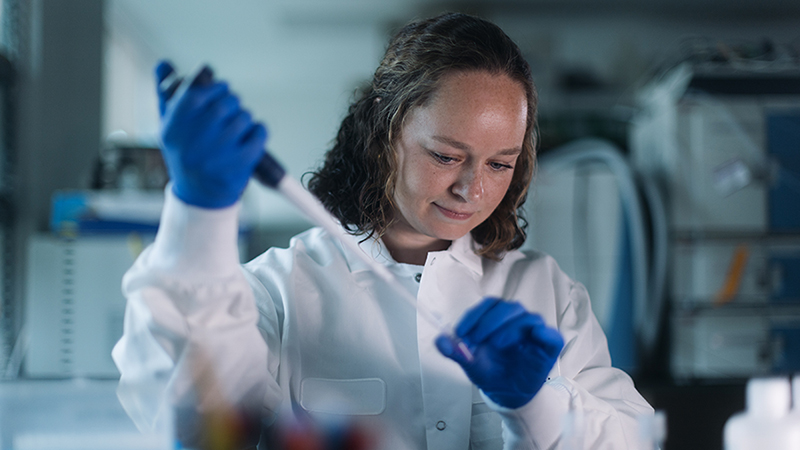
My research focuses on protein engineering to develop molecules that target membrane-embedded proteins. These proteins are key players in immune signaling, and proper membrane protein function is required to defend the body against infectious diseases such as HIV and influenza. When these proteins don’t work correctly, it can lead to numerous diseases, including autoimmune disorders and cancers. Even though they are essential, it’s notoriously difficult to design drugs that target these proteins due to the unique chemical environment they reside in—the lipid bilayer.
For my PhD, I designed proteins that interact with pro-inflammatory immune receptors at hidden sites within this membrane environment. By targeting these hidden regions, we’re able to adjust the structure and tune the function of otherwise elusive membrane proteins, especially when conventional molecular strategies fall short.
Our approach combines computational modeling and protein design software with experimental optimization and validation in the lab. Ultimately these engineered molecules serve two purposes: regulating immune responses and revealing the molecular mechanisms that govern cellular signaling, both of which are key to developing effective anti-inflammatory therapeutics.
Is there a research project that you are currently working on that you are particularly excited about?
I recently began a position as a Research Project Analyst within an incubator-style initiative in the laboratory of Andrew Ward. In this role, I focus on evaluating the therapeutic potential of membrane-targeting proteins and expanding our molecular strategies to engineer membrane proteins that target diseases beyond just inflammation.
A key part of my work involves optimizing our protein design and engineering pipeline to increase throughput. By accelerating this process, we can screen a larger number of protein candidates more efficiently and identify functionally relevant hits with greater precision.
It’s incredibly exciting to be pushing the boundaries of this molecular technology and exploring its full potential for therapeutic applications.
What made you want to pursue your graduate studies at Scripps Research?
I was drawn to Scripps Research because of its strong emphasis on translational science—nearly every lab is motivated by the potential to advance therapeutic development. What also stood out to me was Scripps’ unique nonprofit model, which encourages bold, high-risk research aimed at making impactful discoveries for infectious diseases and other major health challenges. This mission-driven approach felt more invigorating to me than the traditional focus on basic science found at many public universities, and it complements the market-driven focus of the biotechnology and pharmaceutical industries.
On top of that, Scripps Research is home to leaders in structural biology and immunology, which made it the ideal environment to train as an early career scientist. Plus, I had always wanted to learn how to surf—so being just minutes from the beach was a bonus!
What does mentoring and community engagement mean to you?
Chemical and biological sciences are among the few disciplines where education truly operates as an apprenticeship. This places mentorship central to the field—scientists rely on their mentors not just for technical training, but for shaping how they think, solve problems and approach scientific discovery.
I’ve been incredibly fortunate to have had a series of outstanding scientific mentors throughout my undergraduate and graduate training. My advisors, including Marco Mravic and Andrew Ward, devoted years of time and energy to my development, instilling in me both the skills and values that will guide me throughout my career. That kind of investment is rare.
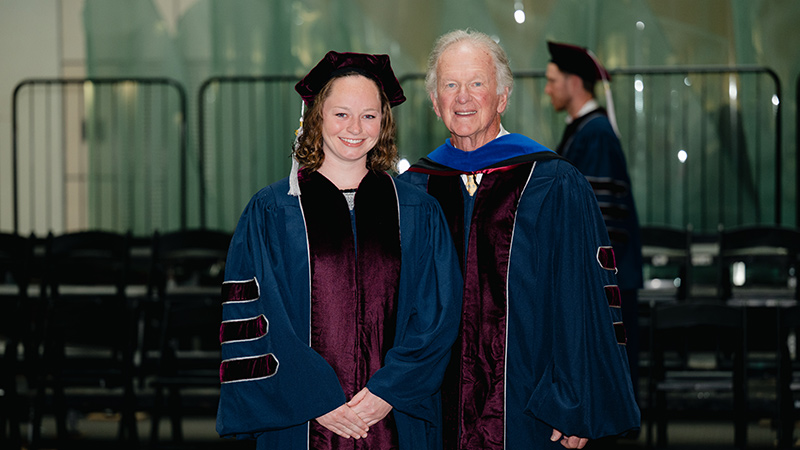
I’ve also had mentors outside the lab who were important in my personal and professional development during graduate school. John Diekman, the chairman of the board at Scripps Research, and his wife Susan, for example, took the time to understand my broader goals and motivations, offering guidance that extended far beyond traditional career advice. Their generosity—including support for my research funding—has had a lasting impact. I’m also deeply grateful for the support and encouragement from the women of the ARCS Foundation’s San Diego chapter.
To keep the cycle of mentorship alive, I believe community engagement is just as important. I’ve lead efforts with the Scripps Research Biotechnology Club to build bridges between students and the broader biotech community in San Diego. In this role, I partnered with Athena, a women-led professional group, to support and increase female engagement within the club. I think this is an essential step in ensuring balanced, inclusive, and sustainable growth across leadership roles in science. These types of connections help foster a deeper public understanding of science and encourage continued investment in human health.