“Fearless” is the word Laura Nicholson picks to describe the next generation of clinical and translational scientists. As a physician and director of education at the Scripps Research Translational Institute, she sees her job as helping her trainees tap into their passion and realize their potential.
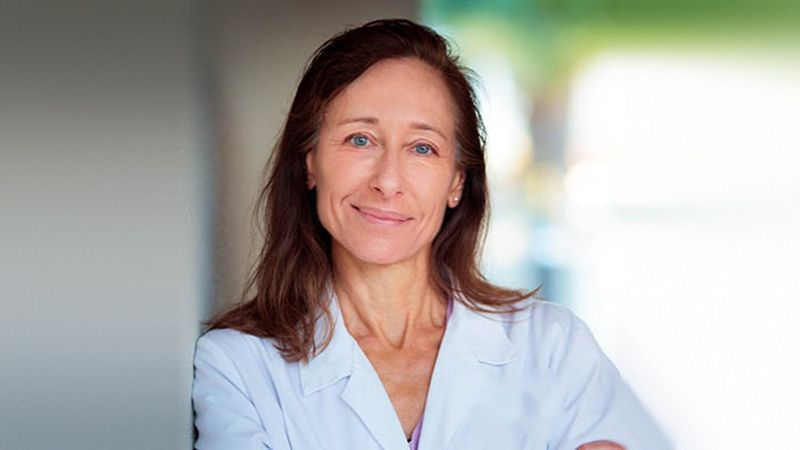
Could you describe your role at Scripps Research Translational Institute?
I joined in 2012 as co-director of the Scripps Research Translational Institute’s KL2 Career Development Program. This program, funded through the National Institutes of Health’s Clinical and Translational Science Awards (CTSA), enables early-career physicians and other professionals with doctoral degrees to pursue mentored research in clinical and translational science, a field of research focused on identifying and removing roadblocks that are slowing the process of turning observations in the lab into interventions that benefit human health. My first task was to learn how to write training grants to apply for renewed funding for the program’s next cycle. It was quite a learning curve!
The Translational Institute and our education programs have grown a lot over the years. We have graduated 38 clinical scholars. Consequently, I became director of education and principal investigator for subsequent grant funding cycles, as well as overseer for our other educational activities including translational science training programs for graduate students and postdoctoral fellows (also funded by the CTSA) and our summer student internships.
I would not be able to do all of this without the support and vision of Theresa Hill, who oversees these expanding educational programs. She emphasizes continuous improvement, communication, motivation, and synergistic partnerships to make all our education initiatives better. This allows me, along with other training program leaders—Stuti Jaiswal, Athena Philis-Tsimikas, and Katja Lamia—to focus on curricular content, faculty engagement, and individual career development plans for our scholars and trainees.
What does mentoring mean to you, and what do you enjoy most about it?
I love science and it’s a joy for me to see young people loving it as well. In this increasingly complicated and distracting world, I hope to provide a supportive environment of enthusiasm and recognition where young scientists can thrive among like-minded people with similar devotion to translational discovery. Training can be a tough time, with successes and setbacks, each year adding new academic challenges and more individual accountability. I enjoy bringing early-career scientists together with one another and with potential role models to show them the variety of ways their hard work will come to fruition, all the sectors that eagerly await their developing expertise, and the peers who understand and celebrate their accomplishments and training milestones. My most important role is learning about each mentee’s unique goals and needs and helping to provide resources and guidance to fulfill them. The best days are full of sharing ideas, giving and receiving novel feedback, and establishing new directions and collaborations together.
What do you wish people knew about training the next generation of clinical and translational scientists?
They are fearless! They are undaunted by new technologies appearing in rapid succession and invariably are early adopters. They come to our workshops and seminars brimming with ideas about how to apply new translational tools within their own projects and toward new interests. Being so computer and internet savvy from an early age, they naturally combine life science and chemistry with coding and machine learning approaches without feeling cross-disciplinary barriers that used to exist. For our professional development meetings, I often invite faculty and unfailingly the scholars ask probing questions leading to exciting discussions about how to apply the shared experiences in their own career development. The next generation of translational scientists optimistically perseveres in a world not recently as supportive of scientific inquiry, committed to their own learning and to translating discoveries into better lives for people. Listening to them present their work at this level, it’s as if they have no choice but to follow their passion for knowing more about how the world works.
What do you like to do in your spare time?
Sometimes I feel like I have so little spare time that I can’t remember what I like to do with it! I manage to travel to get off the grid in the wilderness of Alaska, Mexico, South America, or Africa when I have more time, and Torrey Pines when I can’t go far. I’m planning to take my grand-nephews hiking in local slot canyons, and hope to combine a visit to Northern California’s Dipsea Trail with an upcoming conference trip. I’m also trying to book a coastal adventure in Spain for next year’s total eclipse. Cooking at the end of each workday is wonderfully grounding, and trying new recipes is the most fun. I also love to read fiction and am hoping to set aside more time for that in the near future.